FLUX FLUX-DS-BINDINGS-2526 Bindings Ds
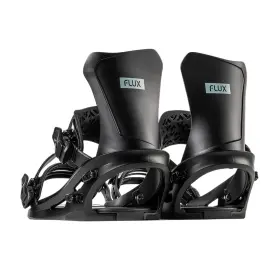
( Brand: Flux ), ( Manufacturer Part Number: FLUX-DS-BINDINGS-2526 ), ( Color: Black ), ( Size: Large )
Review FLUX Ds Bindings
The Flux DSBindings for Flux-2526 is a powerful library designed to simplify the data binding process between your application's state and the views in your user interface. This library is particularly useful when working with Flux and React or other view libraries.
Flux DSBindings is built on top of DS (Data Store) from the Flux architecture. DS is a central store for application data, which can be updated only by actions that are dispatched through the Flux dispatcher. DSBindings allows you to bind the state properties of your DS to the DOM elements, enabling automatic updates of the UI whenever the data changes.
One of the main advantages of DSBindings is its support for two-way data binding. This means that you can not only update the UI based on the current state of the DS, but also update the state of the DS based on user input or other events in the UI. This can save you a significant amount of time and effort compared to manually updating the state and the UI in response to user actions.
Another feature of DSBindings is its ability to handle complex data structures. It can bind not just simple properties, but also nested objects and arrays, making it a versatile solution for more complex applications.
To use DSBindings, you first need to install it in your project. This can typically be done using a package manager like npm or Yarn. Once installed, you can import the DSBindings library and begin binding your data to your views.
Here's an example of how you might use DSBindings to bind a property of a DS to a DOM element:javascript
import DSStore, DS, observable, bindable, oneWay from 'flux-ds-bindings';
const store new DSStore();
const ds new DS( store );
// Define some observable properties in the component's state
const count observable(0);
const message observable('');
// Bind the DS property to the count property
ds.bind(count, 'count');
// Bind the count property to a DOM input element
bindable oneWay count
const input document.getElementById('count-input');
bind(input, count);
// Bind the message property to a DOM div element
observable message
const messageDiv document.getElementById('message');
bind(messageDiv, message, 'textContent');
// Update the count property whenever the input element is changed
input.addEventListener('change', () >
ds.update( count: parseInt(input.value) );
);
// Update the message property whenever the user clicks a button
const button document.getElementById('update-message-button');
button.addEventListener('click', () >
ds.update( message: 'New message!' );
);
In this example, the count property of the component is bound to a corresponding property in the DS using ds.bind() . The count property is then bound to a DOM input element using the bind() function from DSBindings. Whenever the user types a new value into the input element, the update() method of the DS is called with the new value, which in turn updates the count property and the bound input element.
Similarly, the message property is bound to a DOM div element using the bind() function, and is updated whenever the updateMessageButton is clicked.
Overall, Flux DSBindings for Flux-2526 is a valuable tool for simplifying the data binding process in applications that follow the Flux architecture. It supports two-way data binding, can handle complex data structures, and integrates seamlessly with Flux DS and popular view libraries like React.
Flux is a popular modern reactive programming library used for building user interfaces. The Flux-DS bindings for React is a library that helps in integrating Flux into React applications. Here are some pros and cons of using Flux-DS bindings in your React projects:
Pros:1. Seamless Integration: Flux-DS bindings make it easier to integrate Flux into React applications. It provides a set of components and connectors that can be used to manage state and connect components to the store.
2. Simplifies State Management: Flux-DS bindings simplify the process of managing state in a React application. It enables developers to write less boilerplate code and focus on building the application.
3. Improved Performance: Flux-DS bindings provide a more performant way of managing state in a React application. It uses the shouldComponentUpdate lifecycle method to optimize component rendering and reduce unnecessary re-renders.
4. Supports One-Way Data Flow: Flux-DS bindings support the one-way data flow pattern, making it easier to reason about the flow of data in the application.
5. Hot Reloading: Flux-DS bindings support hot reloading, allowing developers to test changes in real-time without having to restart the application.
Cons:1. Learning Curve: Flux-DS bindings have a learning curve, especially for developers who are new to Flux and React. It requires a good understanding of both libraries to use effectively.
2. Complexity: Flux-DS bindings add an extra layer of complexity to the application. It requires additional setup and configuration, which can be time-consuming.
3. Lack of Flexibility: Flux-DS bindings provide a specific way of managing state and connecting components to the store, which may not be suitable for all use cases.
4. Limited Community Support: Flux-DS bindings have a smaller community compared to other state management libraries like Redux or MobX. This may make it harder to find answers to specific questions or issues.
Conclusion:Flux-DS bindings can be a powerful tool for managing state in React applications. It provides a seamless integration of Flux into React, simplifies state management, and improves performance. However, it also comes with a learning curve, adds complexity to the application, and may not be as flexible as other state management libraries.
Recommendation:If you are building a complex React application and are already familiar with Flux, then Flux-DS bindings can be a good choice for managing state. However, if you are new to React or prefer a more flexible state management solution, then you may want to consider other libraries like Redux or MobX. Ultimately, the choice depends on your specific use case and personal preference.
Details:
Resistor High back - A newly designed high back that firmly absorbs movement toward the outside of stance and allows smoother inside. The cushioned footed absorbs impacts, allowing for smoother landings and longer sessions, while the straps provide a snug, secure fit. Super Tough Nylon - Medium flex material suitable for all-round use from low speed to high speed, beginner expert. Slide plate - Low-friction material is placed so as not to inhibit the lateral flex of boots.
Built with a medium-flex high back, the DS offers enough give for playful tweaks and presses, while maintaining support needed more technical tricks jumps. Flux DS Bindings: The Binding is designed for riders who crave a balance of flexibility and control, making it the go-to binding park laps, jibbing, freestyle riding. Micro Adjuster - If you move it forward one memory, will lean approximately 2.5 degrees. More detailed high back settings are possible.
Manufacturer Flux, height , length , width , Weight 7.0000. Need it sooner. The lightweight Transfer Base delivers a responsive feel underfoot, enhancing your connection with the board for precise movements and easy maneuverability.
part #: flux-ds-bindings-2526 price
- $359.95
specifications snobinding:
- brand: Flux
- mpn: Flux-ds-bindings-2526
- color: Black
- size: Large
seller snobinding:
- city: Morgantown, West Virginia
- # reviews: 22163
- rating: 99.4%
shipping snobinding:
- type: Calculated
- cost: $0.00
- class: Expedited, One-day
- carrier: FedEx
- transit: 3-4 Days
- service: FedEx 2Day, FedEx Standard Overnight
offer snobinding:
- started: November 22, 2025
- sold: 0
- availability: In Stock
- quantity: 1
- options: Ship-to-home
returns snobinding:
- policy: Returns Accepted
- method: Money back
- time: 30 Days
- paid by: Buyer
payments snobinding:
- wallet: Paypal
- credit card: Visa
- other
general snobinding:
- Winter Sports > Skiing, Snowboarding Snowshoeing > Bindings
- condition: New
Flux FLUX-DS-BINDINGS-2526 Is Similar To:
- Flux Rk30 Snowboard Bindings Small Purple Green Unused (31.3% similar) Good condition...(June 6th, 2024)
- Flux F23gtst Gt Ltd Snowboard Bindings Team Small 2023 (37% similar) In-stock items purchased before 12 pm mountain time ship same day. Specifications: item condition: new, manufacturer: Flux, manufacturer part number: F23GTST, bike wagon id: L9938080. Product ships through USPS or ups ground. Designed for those looking to take their snowboarding the next level...(July 13th, 2024)
- Flux 973007977162 Xf Snowboard Bindings Black Large 2023 (34% similar) The symmetrical structure on the inside has resilience while following movement of boot, improving torsion control during landing. Transfer: lightweight and direct response that reliably conveys power to the impact point. Nicolas's retro-mod: the outside has a symmetrical shape with classical...(October 2nd, 2024)
- Flux 973007979487 Pr Bindings Mens Size Small 2022 2023 S New Open Box Black And Blue (24.4% similar) Its promised with Flux. May show minor signs of being handled. The blue color is a very light aqua. Entry model binding with Flux's original function. Great for beginners. New open box. Flux pr size small binding. Black and blue...(October 11th, 2024)
- Flux Tt30 Snowboard Bindings Womens M Medium Snowboarding Winter White Purple (26.1% similar) The bindings are designed for use with snowboards and come in a white purple color scheme. With ankle strap and 4X4 binding mount pattern, these bindings ensure a secure fit on the slopes. These Flux TT30 snowboard bindings are perfect for women who love snowboarding. The bindings are made in...(October 30th, 2024)
- Flux Gu15 Snowboard Bindings Womens Sm 7 9.5 Snowboarding Winter Violet 2011 (29.3% similar) The violet color adds a stylish touch to your snowboarding gear. Manufactured in 2011 , these bindings are lightweight and weigh only 3 UBS. These bindings are made in china and designed to last. They are suitable for snowboarding enthusiasts of all levels and ideal those who enjoy winter sports...(October 30th, 2024)
- Flux Fsm24lb-l-back Ds Step On Snowboard Bindings 2024 (45.7% similar) Flux ds step on snowboard bindings 2024. Shipped with USPS priority mail. Condition is new...(October 31st, 2024)
- Flux Se30 F.t.w Purple Bindings (43.5% similar) Used but in excellent condition...(December 6th, 2024)
- Flux F23cosn Co Snowboard Bindings Natural Small 2023 (37.4% similar) For any other reason:: you can return the product for reason, as long it is in original condition when was purchased, with packaging. An Eco-friendly model filled with Erik's thoughts. Product ships through USPS or ups ground. Solid high back super tough nylon plus genetic base plate performance...(December 10th, 2024)
- Flux F3gusw Gu15 Sm White Snowboard Bindings New (41.9% similar) The white color adds a stylish touch to your snowboarding setup, while the brand name Flux ensures quality and durability. With a binding size of, these bindings are suitable for those with smaller feet. Don't miss out on the opportunity to enhance your snowboarding experience with these top...(December 15th, 2024)
- Flux Fpr02s Pr 15 Snowboard Bindings Medium Black Missing One Buckle Read (30.6% similar) See photos for details about this. These bindings are in great condition minus one issue: the right foot binding is missing buckle latch on toe strap. All the other latches and straps function normally...(December 19th, 2024)